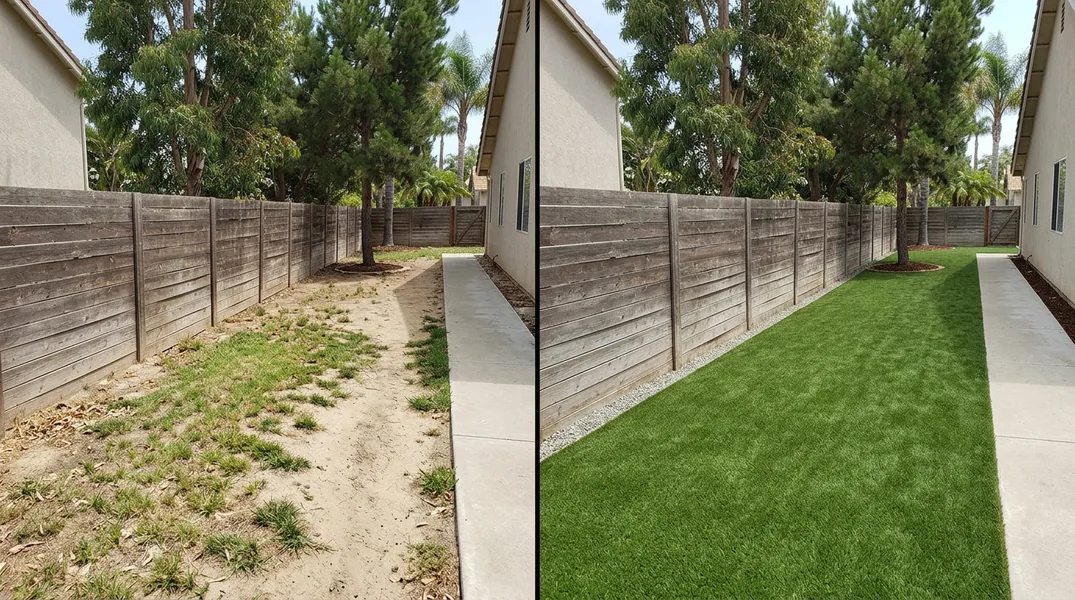
The Oceanside Landscape Challenge: Why Your Lawn Struggles
If you own a home in Oceanside, you already know that maintaining a lush natural lawn is no simple task. The coastal environment presents unique challenges that most homeowners don't face inland. Salt spray from the Pacific Ocean corrodes plant tissue, sandy soil drains water faster than clay or loam, and the intense California sun can stress even drought-tolerant grass species during peak summer months.
Traditional turf in Oceanside demands constant irrigation, frequent fertilization, and regular pest management just to survive. The salt air accelerates thatch buildup, reduces soil nutrient availability, and weakens grass roots. Many homeowners find themselves in a frustrating cycle: watering more, spending more on maintenance, and still watching their lawn decline. This is where the conversation about turf vs artificial grass becomes not just practical, but genuinely necessary for coastal residents.
Artificial Grass vs Real Grass: The Core Differences
When comparing artificial grass vs real grass, the differences extend far beyond appearance. Real grass is a living system that requires sunlight, water, nutrients, and regular mowing. It supports soil microbes, improves drainage, and provides a natural cooling effect through transpiration. However, in Oceanside's salty, sandy environment, these benefits come with substantial labor and expense. Real grass also requires seasonal aeration, overseeding, fungicide applications, and pest control to thrive near the coast.
Artificial turf, by contrast, is a manufactured product made from synthetic fibers anchored to a base layer. It requires no watering, no fertilizer, no mowing, and no chemical treatments. Modern artificial grass looks remarkably realistic and feels natural underfoot. It doesn't degrade under salt spray, drains efficiently even in sandy soil, and maintains its color and structure year-round. For homeowners seeking Residential Artificial Grass Installation, the appeal is clear: consistent appearance, minimal upkeep, and freedom from the coastal maintenance nightmare.
The trade-off is upfront cost and the fact that artificial grass is not a living ecosystem. Some homeowners value the environmental benefits of natural lawn, while others prioritize water conservation and time savings. Your choice depends on your priorities, your budget, and your lifestyle.
Xeriscaping and Drought-Tolerant Landscaping: A Smarter Approach
Xeriscaping and drought tolerant landscaping have become increasingly popular in California, and for good reason. These landscape design philosophies emphasize water conservation, native plant selection, and efficient irrigation. In Oceanside, where water restrictions are common and summer droughts are predictable, xeriscaping makes environmental and financial sense. The approach often combines hardscape elements like pavers or gravel, native shrubs, and groundcovers that thrive in coastal conditions without supplemental watering once established.
Artificial grass fits naturally into a xeriscape design. By replacing thirsty turf with synthetic grass, you eliminate one of the largest water consumers in a typical residential landscape. You can then redirect water savings to other plantings, create rain gardens, or simply reduce your overall water footprint. Many homeowners in Oceanside are discovering that a hybrid approach works best: artificial turf in high-traffic or entertainment areas, combined with native coastal plants, drought-tolerant shrubs, and permeable hardscape in other zones.
This strategy addresses the core challenge of coastal living: achieving an attractive, functional outdoor space without depleting water resources or fighting against the salt-laden environment. Xeriscaping principles, paired with artificial turf where appropriate, create landscapes that are both beautiful and sustainable.
Why Salt Air and Sandy Soil Favor Artificial Turf
The combination of salt spray and sandy soil is particularly damaging to natural grass. Salt accumulates in the soil and plant tissues, disrupting water uptake and causing leaf burn. Sandy soil, while excellent for drainage, holds very few nutrients and dries out rapidly in summer heat. A natural lawn in these conditions requires constant supplemental watering, frequent nutrient applications, and careful species selection. Even salt-tolerant grass varieties like tall fescue or perennial ryegrass struggle when exposed to direct ocean spray and sandy conditions over multiple seasons.
Artificial turf is completely immune to salt damage. The synthetic fibers don't absorb salt, and salt spray simply rinses off during rain or can be cleaned with fresh water if needed. Sandy soil is actually an advantage for artificial grass installation because it drains exceptionally well, preventing water pooling and extending the life of the turf system. The infill material (typically sand, rubber, or a blend) integrates seamlessly with your existing sandy soil, creating a stable, long-lasting surface. For coastal homeowners, this resilience is a major selling point.
Residential Artificial Grass Installation Cost in Oceanside: What to Budget
Understanding the financial picture is essential when deciding between turf and real grass. Pricing for Residential Artificial Grass Installation varies based on yard size, existing soil conditions, and the quality of turf selected. In Oceanside, homeowners typically invest between $8 to $18 per square foot for professional installation, depending on site preparation and product grade. A 1,000-square-foot lawn might cost $8,000 to $18,000 installed, which sounds significant until you compare it to the long-term costs of maintaining natural grass.
Over a 10-year period, a natural lawn in Oceanside costs considerably more when you factor in water bills (often $100 to $300 monthly during summer), fertilizer, pest control, aeration, overseeding, equipment maintenance, and professional services. Many homeowners spend $2,000 to $5,000 annually on lawn care. Artificial grass, by contrast, requires minimal maintenance after installation. You'll save on water, eliminate fertilizer and pesticide costs, and avoid equipment purchases or professional mowing services. The payback period is typically 5 to 7 years, after which you're essentially maintaining a free lawn.
For a detailed breakdown of pricing specific to your property, contact Oceanside Artificial Grass Installation at (760) 496-5579 for a free estimate.
Making Your Decision: Questions to Ask Yourself
Choosing between turf and real grass ultimately depends on your personal values, available time, and budget. Ask yourself: How much time do you want to spend on lawn maintenance? Are water conservation and environmental impact important to you? Do you have the budget for professional landscaping services year-round? How much are you willing to invest upfront versus spreading costs over time? If you have pets, consider whether Pet Turf & Dog Run Installation might be a better fit than natural grass, which can develop bare patches and mud problems with heavy use.
If you're leaning toward artificial grass, the next step is simple. Contact Oceanside Artificial Grass Installation to discuss your specific needs, see samples of quality turf options, and understand how Residential Artificial Grass Installation works in your Oceanside home. Call (760) 496-5579 or request a free estimate online. Our team understands the unique demands of coastal landscaping and can help you design a solution that's beautiful, practical, and built to last in Oceanside's challenging environment.
Looking for a professional artificial grass installation company in Oceanside? Oceanside Artificial Grass Installation responds fast for all your artificial grass installation needs.
Get a Free Quote