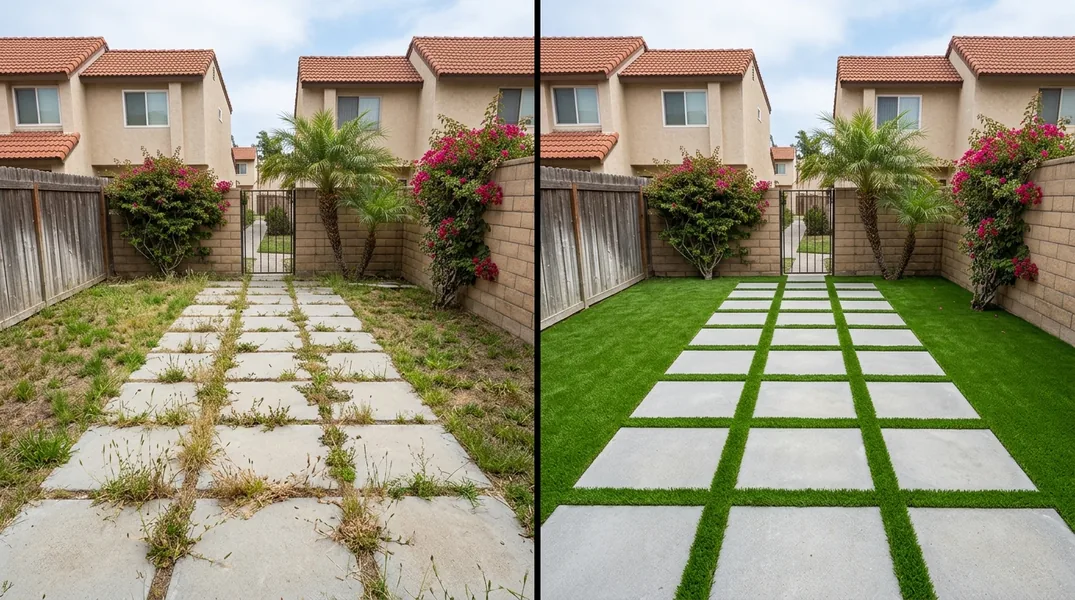
Understanding Common Artificial Turf Damage in Oceanside
Artificial grass is designed to be durable and low-maintenance, but like any outdoor surface, it can develop problems over time. Whether you've invested in Residential Artificial Grass Installation or you're considering it for your home, understanding the types of damage that can occur helps you catch issues early and keep your lawn looking its best.
Homeowners in Oceanside often encounter three main categories of turf damage: edge lifting, seam separation, and heat-related damage. Each of these issues has different causes and requires a specific repair approach. The good news is that most damage is preventable with proper installation and maintenance, and when problems do occur, they're often repairable without replacing the entire lawn.
Melted Artificial Grass: Window Reflection and Heat Damage Explained
Melted artificial grass is one of the most common complaints we hear from homeowners, and it's often caused by an unexpected culprit: sunlight reflecting off windows or glass doors. When sunlight bounces off a window at the right angle, it can concentrate heat onto your turf, reaching temperatures high enough to melt or warp the synthetic fibers. This type of damage typically appears as a discolored, matted, or shiny patch on your lawn. Window reflection turf damage can happen quickly, sometimes within just a few hours of concentrated reflection.
Beyond window reflection, direct intense heat from metal surfaces, pool equipment, or even certain types of outdoor furniture can also cause melting. In Oceanside, where we enjoy plenty of sunshine, this is a real concern for homeowners with south-facing windows or reflective surfaces near their yards. The best prevention is to identify potential reflection sources and either adjust window coverings, reposition furniture, or install shade structures. If you already have melted spots, don't panic. Small areas can often be repaired by a professional, though severe damage may require section replacement.
Lifted Edges and Seam Separation: Causes and Solutions
Lifted edges occur when the perimeter of your artificial turf begins to curl up or separate from the ground. This is typically caused by improper installation, inadequate securing, or ground movement beneath the turf. Seam separation, on the other hand, happens along the lines where two pieces of turf are joined together. When seams fail, water can seep underneath, and the turf can shift or bunch up, creating an uneven surface that's both unsightly and potentially hazardous.
Both of these issues usually stem from installation problems rather than normal wear and tear. If your turf was installed without proper base preparation, adequate infill material, or secure seaming techniques, you're more likely to experience edge lifting and seam separation. High foot traffic in certain areas, temperature fluctuations, or ground settling can also contribute to these problems. The key to avoiding these issues is working with an experienced installation company from the start. If you're already dealing with lifted edges or separated seams, professional turf repair is essential to prevent further damage and restore safety to your yard.
Artificial Turf Repair Near Me: When to Call a Professional
Knowing when to tackle a repair yourself and when to call a professional is important for protecting your investment. Small debris, dirt, or minor discoloration can often be cleaned with a stiff brush and water. However, when it comes to structural damage like melting, seam separation, or edge lifting, professional intervention is the right choice. Attempting to re-secure or reglue turf without proper equipment and expertise can actually make the problem worse.
Oceanside Artificial Grass Installation specializes in professional turf repair for homeowners throughout the area. Our technicians can assess the extent of damage, determine the root cause, and recommend the most cost-effective repair solution. Whether it's patching a melted spot, re-securing lifted edges, or addressing seam issues, we have the tools and experience to restore your lawn properly. If you've noticed damage to your turf or have concerns about its condition, reach out to us at (760) 496-5579 for a professional evaluation.
Preventing Future Turf Damage: Maintenance and Best Practices
The best approach to turf damage is prevention. Regular maintenance and awareness of potential hazards can extend the life of your artificial grass significantly. Inspect your lawn regularly for early signs of problems, such as slight edge curling, discoloration, or soft spots that might indicate water drainage issues. Keep the area around your turf clear of sharp objects, and avoid placing heavy planters or furniture directly on the surface for extended periods.
For homeowners with Pet Turf & Dog Run Installation, additional care is needed to manage urine and bacteria. Regular rinsing with water and use of enzyme-based cleaners designed for artificial turf can prevent breakdown of the fibers and unpleasant odors. If you have a Pool Surround Turf, ensure that chlorine and pool chemicals don't pool on the surface, as this can degrade the turf over time. Proper drainage is essential for all types of artificial grass installations, so make sure your base was installed correctly and that water flows away from the turf rather than pooling underneath.
Turf Repair Costs and When to Replace vs. Repair
Understanding the financial side of turf repair helps you make informed decisions about your lawn. Minor repairs like patching small melted areas or re-securing edges are typically affordable and make sense to pursue. However, if your turf is very old, has extensive damage across large areas, or has recurring problems despite previous repairs, full replacement might be more cost-effective in the long run. The pricing for repairs varies based on the type and extent of damage, but most homeowners find that addressing problems early prevents more expensive issues down the road.
When you're evaluating repair options, consider how long you plan to keep your artificial grass and the overall condition of the installation. If your turf is relatively new and the damage is localized, repair is almost always the right choice. If your lawn is 10 to 15 years old and showing multiple signs of wear, it might be worth discussing full replacement options. Contact Oceanside Artificial Grass Installation at (760) 496-5579 or request a free estimate to discuss your specific situation and get professional guidance on the best path forward for your home.
Looking for a professional artificial grass installation company in Oceanside? Oceanside Artificial Grass Installation responds fast for all your artificial grass installation needs.
Get a Free Quote